Introduction
The Abu Ambassadeur isn’t just a reel — it’s a legacy. First introduced in Sweden in the 1950s, this iconic baitcaster has been in the hands of bass pros, European pike anglers, and Japanese BFS tinkerers alike. Known for its tank-like durability and endlessly modifiable guts, it’s the kind of reel that inspires loyalty, upgrades, and sometimes obsession. Whether you’re running a vintage 5000C or a modern Morrum, the Ambassadeur line is a bridge between old-school mechanics and new-school performance. Here’s what makes it one of the most beloved reels of all time, in ten bullet points or less.

1. Built like a tank and made to last decades.
From the solid aluminum frame to the precision brass gears, Ambassadeurs were made with repairability and longevity in mind. Early models are still fully functional after 40+ years with basic maintenance. It’s a reel your granddad used and your grandkid still can. You don’t buy an Ambassadeur for a season; you marry it.
2. Modders love them for a reason.
With easy access to aftermarket spools, bearings, drag stacks, and brakes, Ambassadeurs are basically the Jeep Wranglers of baitcasting. BFS conversions, mag brake installs, and even full custom frame swaps are common. Entire online communities are built around tweaking these reels. If you like tools and tuning, welcome home.
3. Swedish heritage means precision over flash.
Unlike many reels with high-speed marketing and hollow promises, the original Ambassadeurs were built in Svangsta, Sweden, with an engineer’s mindset. Even the serial numbers are part of their charm, helping collectors date each model. They feel industrial in the best way — no-nonsense, all-function. You’ll feel the difference just cranking the handle.
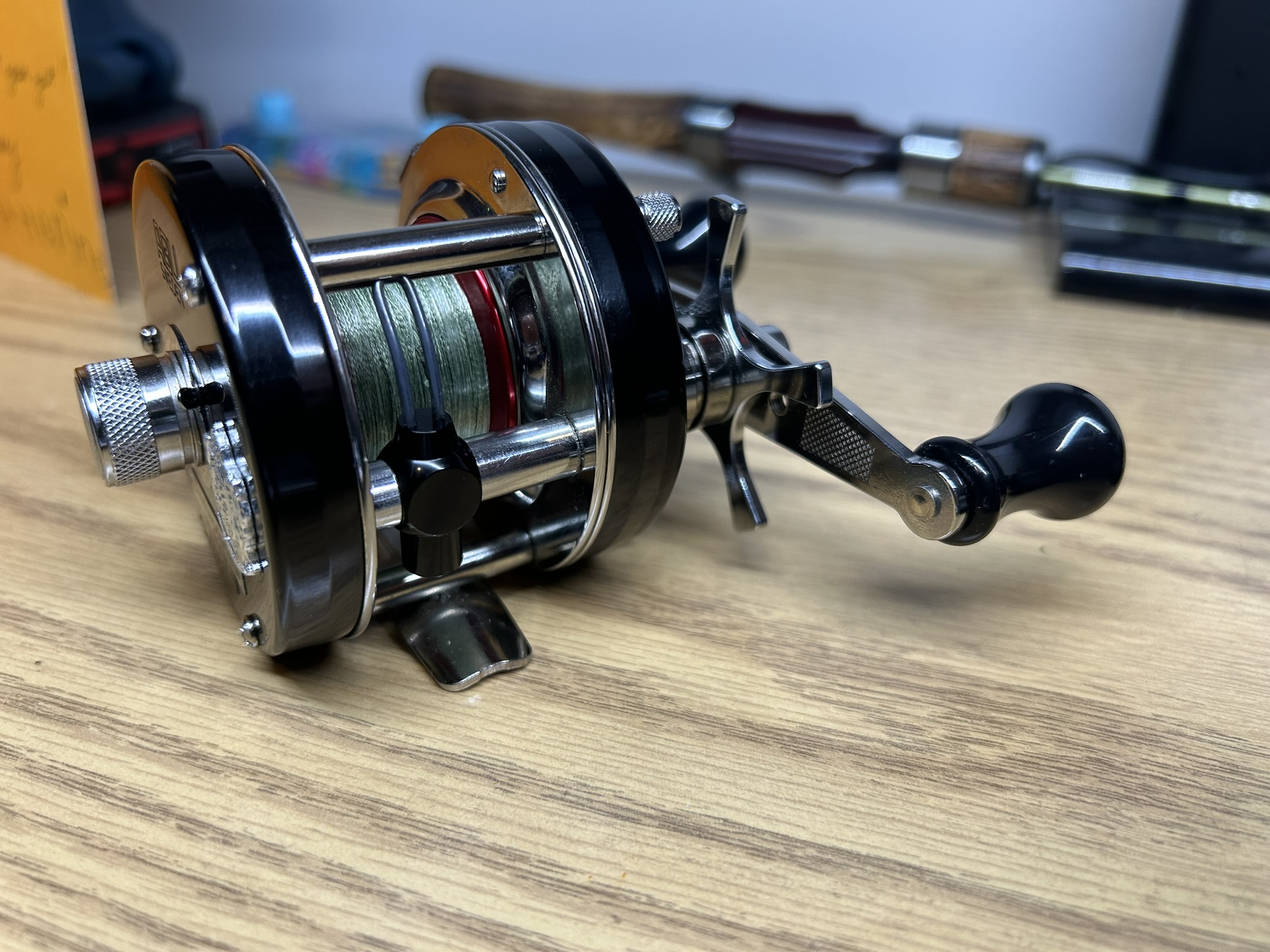
4. Casting control is simple but effective.
Most Ambassadeurs use centrifugal brakes and a tension knob, no digital chips or fancy toggles. This gives the angler complete mechanical control over cast distance and backlash risk. It’s not idiot-proof, but that’s the point. Mastery of an Ambassadeur means you’ve earned every yard of line.
5. Not just for bass but pike, salmon, catfish, and surf.
Thanks to their range of sizes and gear ratios, Ambassadeurs are used across species and continents. From surfcasting for striped bass in the Carolinas to musky fishing in the Midwest, they show up in unexpected places. Some anglers even use them for trolling. It’s the Swiss Army knife of round reels.
6. Maintenance is easy and satisfying.
Cleaning and re-greasing an Ambassadeur feels more like tuning a Swiss watch than fixing a tool. Most parts are accessible with a flathead screwdriver and some patience. And unlike sealed modern reels, everything is meant to be opened and loved. Regular maintenance extends the reel’s life by literal decades.
7. They spawned entire subcultures in Japan and Europe.

In Japan, BFS anglers have turned older Ambassadeurs into lightweight casting machines. In Europe, they’re seen as traditional gear for river predators. You’ll find boutique brands making custom parts — everything from micromachined spools to hand-carved wood knobs. The global community is deep, loyal, and always innovating.
8. Whether on a shelf or a rod, it earns its place.
An Ambassadeur looks just as good on display as it does bolted to your favorite fiberglass rod. Its aesthetic is a blend of mechanical honesty and classic design. For many anglers, it’s the reel that started it all and the one they always come back to. Because in a world of disposable tech, the Ambassadeur endures.
9. Their design shaped the blueprint for modern round reels.
The Ambassadeur set the standard for what a round baitcasting reel should feel like: smooth, sturdy, and serviceable. From drag placement to frame geometry, many of today’s high-end round reels trace their DNA back to Abu’s original engineering. Even decades later, brands still mimic the Ambassadeur’s gear layout and handle ergonomics. It’s not just a reel it’s the prototype everyone’s still chasing.